Thursday, 1 July 2010

Walkabout - Docklands of London

The focus of today’s walk is on London’s historic docklands, heart of the old empire’s trades in opium, tea, cigarettes, just to name a few. It was also one of the most crime ridden, seedy and unsavoury places in London, home to murderers, prostitutes, the desolate and unwanted. The docklands of today is a contrast between depravation and profligacy, modesty and lavishness. This all wrapped up in centuries of history, waves of immigration and the enduring views of the Thames River.

Our journey starts at Shadwell DLR, which I have only come to know because you can get a 2 bedroom flat for £150k, even though it is literally a stone’s throw from the city. I soon found out why. Even approaching the station, it is the least pleasant suburb I have seen so far in London. Yes, I have been to Elephant and Castle, Deptford, Hackney and Stepney. The reason is not because the area is dirty, or the people. It’s simply the hideous council ex-authority building scattered around the station. These were build in the 1960’s after WWII, when Britain had no money after the war. Today they are cheap and affordable homes to mostly the Indian and Pakistani community. As a renter I wouldn’t live here even if it’s so cheap, simply because there doesn’t appear to be any life to the place. The surrounding areas just look deprived. Unfortunately I did not take any picutures, so I guess you'll just have to come see it!


Unsurprisingly, Shadwell lives up to its name as it’s derived from Shitwell, or Shitewell originally. It is also famous for being meticulously described by Dickens in his many books, as he accounted his flings in opium dens and brothels in one of the ‘meanest’ area of London.

I make my way down towards the river, through an abandoned shopping complex and into Wapping, where the scenery begins to change dramatically. A lot of the docklands and old wharf buildings are still there, restored and converted into residential flats. Fortunately they still keep their original cranes, which were used to hurl goods over the ship. Before I knew it, I was in an upmarket area, home to young professionals working in Canary Wharf or the City, who have no doubt found themselves here for the wonderful views of the Thames.


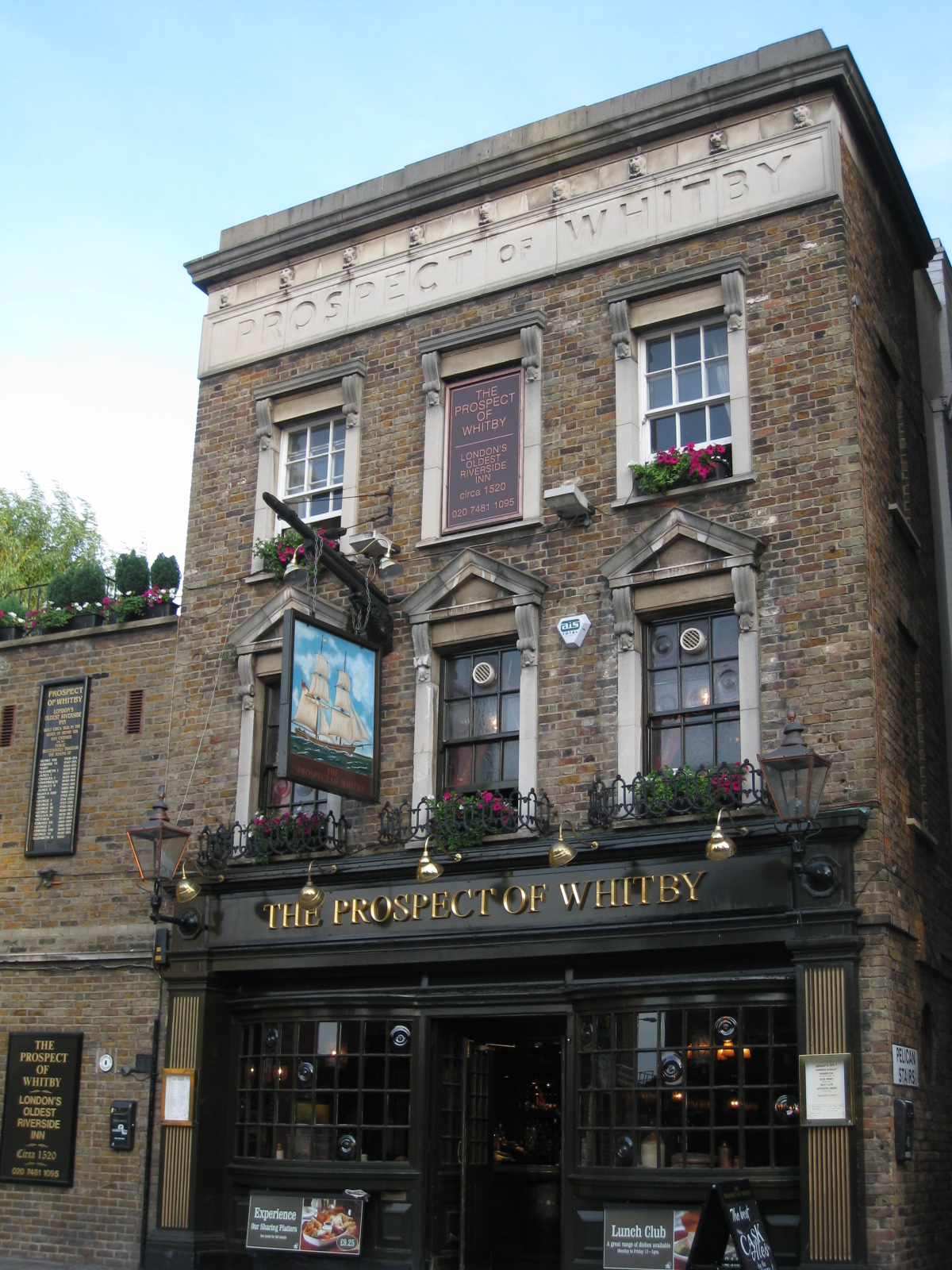
Just before reaching the river I come across the oldest pub in the docklands, the Prospect of Whitby, said to have first opened in 1520. It was also a pub frequented by Charles Dickens. To this day it keeps the same look and charms of nearly 500 years back, and I hear the locally brewed ales inside are fantastic. Walking past the pub I reach Shadwell basin, which looked picturesque at dusk, with a sense of loneliness. It doesn’t have the poshness of Limehouse basin, which we will get to last, but nevertheless is quite beautiful.


This stretch of the Thames overlooking Canary Wharf is absolutely magnificent, as it is wider than in the West End. More so than a river, I felt the two banks were separately by sea, as I heard the powerful current of the water. Walking along the Thames, I felt the people who lived here are so privileged; they’ve definitely chosen a great spot to enjoy London. I also enjoyed seeing people going about their leisure, fishing off an abandoned but breathtakingly tall pier.


The final stretch of the walk takes us to riverside Limehouse, and we move from the middle-upper class to the truly elite. The flats here are 7 figures, and apartment blocks are catered by fancy Spanish/Italian restaurants with slick interiors, designed for residents who don’t need to cook for themselves.


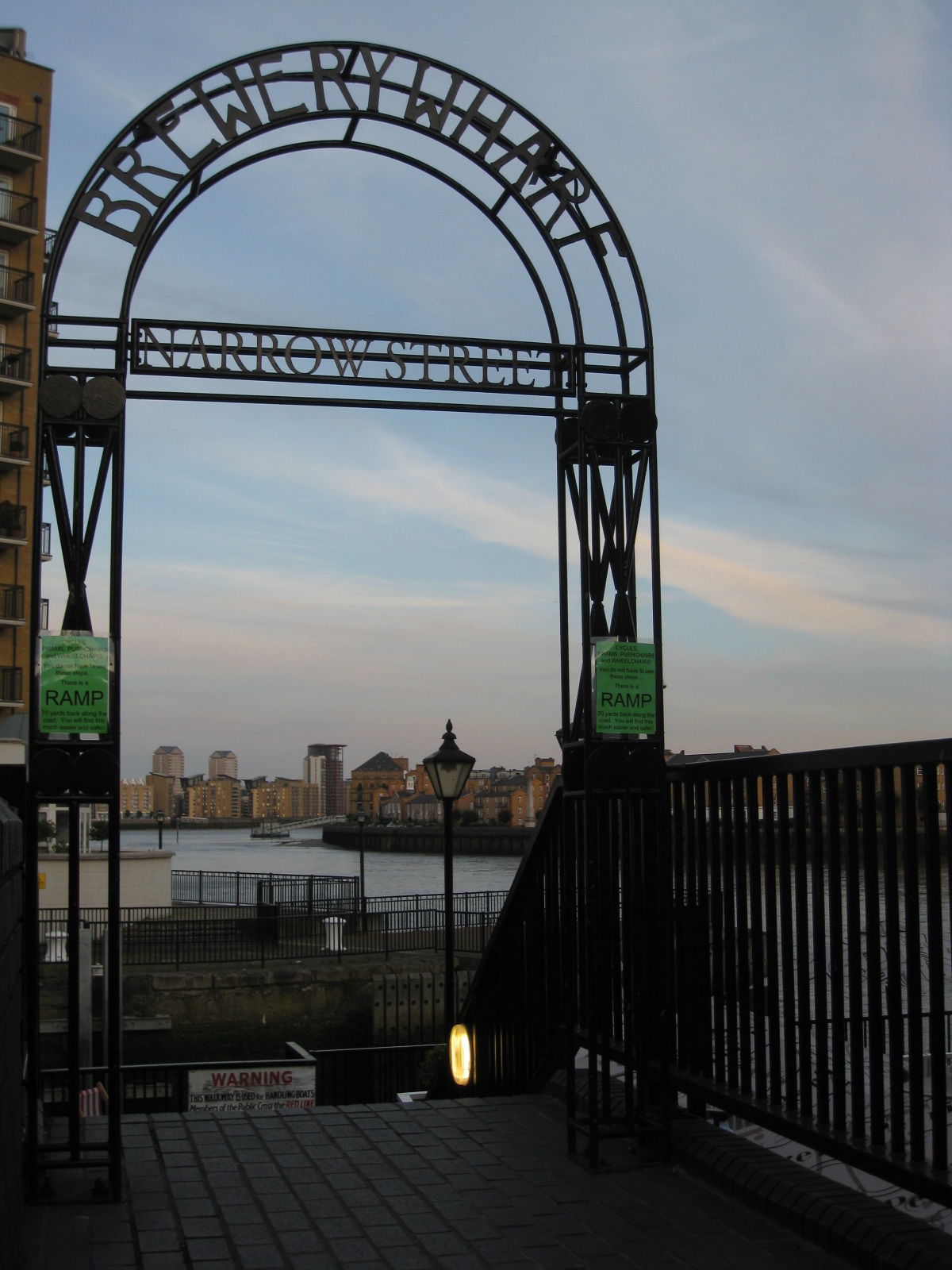
The Narrow is a particularly yuppie street, frequented by young managers working in Canary Wharf, rich students from China and Japan, and others of various talent. This is where the ‘pub’ narrow sits, famously owned by Gordon Ramsay. It is what’s called a gastro pub, where finger food can set you back £15, and mains starting from £25 upwards. I don’t envision myself ever sitting in there enjoying the glorious river views, but by now I’ve had enough of the good life just doing this walk.


The walk finishes off at Limehouse basin, one of my favourite spots in London to relax or go jogging. I also pass the basin when I walk over to Canary Wharf. I always feel so lucky that such privileged, expensive delights are just 10 minute walk away from my modest existence at Mile End. Walking back home along the canal, I felt sad that in one week’s time, I’ll be in new surroundings.


Monday, 21 June 2010

Walkabout - Legal "Inns" of London

I've been on 4 historical London walks so far in my 9 months in London, as well as many other random discoveries around the East End and Docklands area where I live. I've decided to ramp that up and to put together some photo albums....

I must give credit to http://londonwalks.libsyn.com/ for supplying the inspiration for me to thoroughly discover London properly and know its history....I felt I never got to know Osaka, Kobe, Kyoto properly the short time I was there, and I don't want to make the same mistake with London.

Today, my after-work walk involves historical Legal London, which conveniently is located in the area I work - Chancery Lane. This is where all the "Inns" of law are, housing all the barristers and solicitors. It's also home to UK's major courts of justice. Law is an area i should be familiar about but I have gladly chosen to leave it. It's ironic that my new career is set right in the heart of legal London.

Journey starts at Chancery Lane tube station, where I'm greeted by a traditional..16th century Tudor style wooden building.


Going straight through the building I immediately enter legal London, encountering the Staple Inn. There is a really nice courtyard for lawyers to clear their heads before heading to court.


Walking straight on, I reach the Stone Buildings, former home to the UK's Patent Office. This was where intellectual property law was first enforced and adjudicated. It's a really nice white stone building.


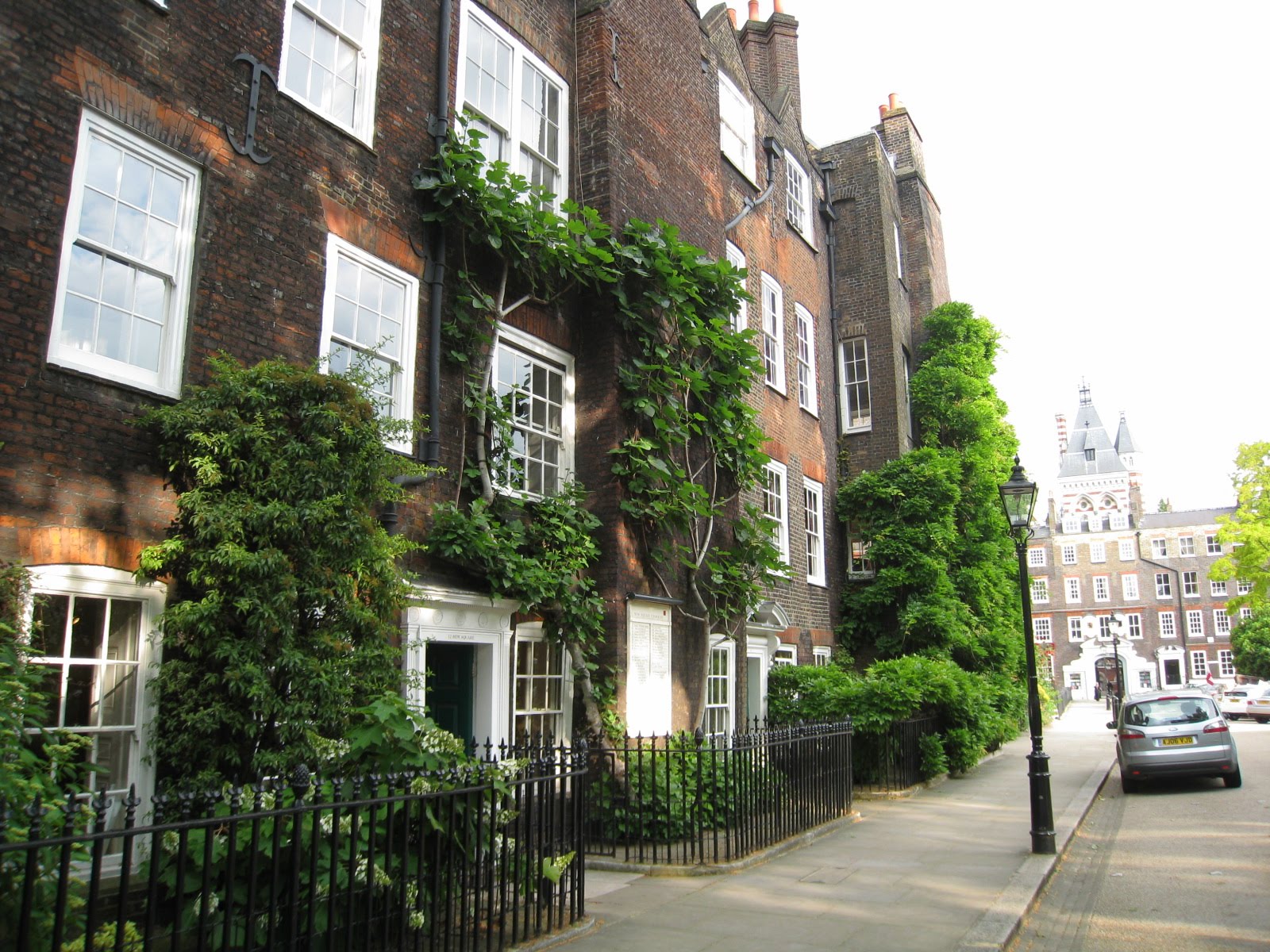
Moving on, I reach a few spacious squares with characterised by BMWs, Porshes and Aston Martins. These are home to a number of chambers where barristers practice. Unlike Sydney where lawyers reside in modern buildings, here they work in centuries old brick houses, with ivy vines growing off the walls. It's quite a relaxing environment. The pictures shows it quite nicely but I've seriously overexposed all my photos today...it becomes a depressing theme....


All the names of barristers are inscribed in front of the chamber


Moving on past some alley ways and law books shops, I venture past Bell Yard, with the Royal Courts of Justice on my right:


I then cross the road, and into the second Inn, through the Middle Temple Lane. This is home to many Inns of law and also the Temple Church, which I understand hosts some fantastic concerts.


Again, there are some neat alleys, leading through to the Temple Church. A private function was being held, so I couldn't go inside.


Walking past the Temple Church, again I met met with some beautiful squares where lawyers wine and dine and enjoy the open space. The architecture and gardens here are simply fantastic.


Finding my way out of the gardens and squares and back onto the main road, I am immediately met by the Royal Court of Justice, home to most of the great legal cases in British history.


Straying left of the Court I enter into Clement's Inn and into the territory of the London School of Economics. I took a picture of the Thomas More Building because Thomas More was famously remembered for hunting down William Tyndale who translated the Bible into English against the King's will, and getting him executed. ironically, Thomas More was also executed, for refusing to recognise Henry VII was the Head of the Church of England (according to wikipedia :P).


Walking around LSE, I felt really out of place because it's such a priviledged school, which made me feel a bit daunted... I then bumped into The Old Curiosity Shop, which appeared in many of Charles Dickens' novels. I'll leave for you to wiki this. I liked the compact look of the house, which really really stands out amongst its surroundings.


Walking past, I quickly reached 59 Garden Court. According to the podcast, this was the scene of the only successful assasination of the British Prime Minister in UK's history. Spencer Percival was the unlucky politician shot by a maniac.


The last part of the walk brought me to Gray's Inn, which also has its share of petite gardens and stone staircases. Why is Gray's Inn significant for Chinese history?


Because it was home to Sun Yat-Sen, the father of the Chinese Republic, when he was living in exile in London. This is still commemorated here at the Inn.


That brought me to the end of the walk, which only took just over an hour. It was really enjoyable learning about the legal history of Britain and experiencing all the traditions which has blended into everyday life here in London. All this in my backyard, right outside the doorstep of my workplace. I know my photography skills didn't do it much justice, but hopefully better stuff will come the next edition!

Feb-June Catchup!

In a blink of an eye, it's been nearly 4 months since I last updated my blog!!

Unfortunately, my podcast came to no avail as it was either too time consuming or I just lacked motivation. Maybe both combined. Seems like it hasn't just been me though. Thomson Reuters have terminated their carbon market community, which was invaluable source of information for me. Now I troll around carbonoffsetdaily.com, businessgreen.com and other sites for my news feeds but it's not the same really. The carbon markets are no longer so sexy, though I still wish I was working in the CDM field.

During these months I've been following more generally the business world, and started investing in some unit trusts, taking advantage of my ISA allowance. By stroke of luck I actually managed to avoid any exposure to BP before the oil spill. But to be honest, I really don't have much clue what I'm doing. The 8 funds I've put money into are:

Aberdeen Emerging Markets A Fund Acc
First State Greater China Growth A Fund Acc
Invesco Perpetual Latin American Fund Inc
Jupiter Financial Opportunities Fund Inc
Jupiter India Fund Acc
Legal & General All Stocks IL Gilt Ind Trust Inc
M&G Strategic Corporate Bond A Fund Inc
Neptune Russia & Greater Russia A Fund Acc

I only really wanted to go for the emerging markets...though they are the highest risk ones. But I succumbed to my own risk averse nature and bought into funds in UK gilts, corporate bonds as well as no-risk cash. Unsurprisingly, they are performing the worst of them all. Overall, it's small money and nothing really to be excited about.

I've been thinking about buying gold the last 2 months, and keep holding it off because I think there's no way it'll keep rising. But as always, it just keeps motoring upwards with no end in sight....if only I was making some money for myself back in 2001...when gold was around $200 an ounce (it's $1200 an ounce now). Back then, Gordon Brown inexplicably sold off half of UK's government's gold reserves, some 375 tonnes at those ultra-cheap prices. How they wished they had held on!

In terms of the carbon world, it's been a year of consolidation and wait and see, I guess. Carbon is no longer significant enough to make big news, and major players have lost value and been bought off by large multinationals really as leverage for the off-chance that carbon will one day matter again.

Under everyone's radar, Ecosecurities have been bought by JP Morgan, Point Carbon by Thomson Reuters, New Energy Finance by Bloomberg, and Tricorona by Barclays. Now they are all operating under the umbrellas of those big companies and it's no longer so transparent what they're doing and where they are going.

As for global climate policy, it's so predictable that it's no longer worth reading beyond the headlines. Of course COP will meet again and again and developing and developed country won't agree because geopolitics is more important.

Nevertheless, there are progress made everyday on GHG mitigation methodologies and new projects through the CDM pipeline.

In the developed world, the most clean tech could hope for is to survive. Especially given the sovereign debt crisis, huge cutbacks will be announced in Germany, UK and beyond. In actual fact the UK emergency budget will be announced tomorrow and it'll be interesting to see how much the green agenda will be cut.

In my particular field, supply chain carbon management remains to be a very niche field involving only the brave few. However, the global standard 'wannabe', the WRI standard on product carbon footprinting is due to be finalised in late December this year and if companies unite and embrace this particular standard, it may bring some co-ordination in the market.

Outside of worklife, I've been keeping up with Kendo as per usual and also enjoying the city of London. Without being too touristy, I've been doing historical walks around London on my ipod, and recording my tracks as I go. Hopefully I'll keep this up and show everyone all the facinating strands of London life.

Saturday, 20 February 2010

This Week in Carbon (beta) - a Podcast Initiative

Hi everyone my name is Ming-Chun Hsu, owner and presenter of This Week in Carbon, a podcast about news and viewpoints on the world of carbon management. The podcast’s format is as follows. First, a round-up of what is making news in the world of carbon. Secondly, a review of the carbon markets including the latest movements in the EU ETS and the CDM. Thirdly, I will attempt to answer questions from listeners on their most pressing carbon issues. I will also, from time to time, conduct interviews with industry leaders in the private sector, government and academia.

As all of you are aware now, climate change and carbon management is now a major policy issue facing all countries. The unique aspect of carbon is that it is awfully complicated, pervading weather, energy, transport, goods and services, food and basically every activity in life. The aim of this podcast is to unlock the complexities, have stimulating debate on issues and give people the knowledge, the power to make decisions in their lives that are consistent with their ideals, whatever they may be.

But a bit of a background about me. I am Taiwanese born, grew up in Australia and currently working as a carbon analyst at an environmental consultancy in London. I have a keen interest in climate change and energy as a whole, as well as finance, politics, economics and healthy living. All of these strands are inter-related with the issue of carbon and hopefully through this podcast, we can make sense of the relationships. There is really no limit to what we can talk about on this show. It can be as technical or general as you wish. Whether you are interested in climate change, low carbon living, carbon trading or the clean tech industry, you’ve come to the right place.

I am in an unique situation of being able to provide the viewpoints from the bloc leading world action on climate change, as I am living and working in London. I will be doing the podcast half in English and half in Mandarin. My Mandarin is not the highest level so please be tolerant of that.


Kyoto risks dying as no new climate deal in sight


This is from an article that appeared in Reuters dated 18 February. It says that the Kyoto Protocol is in risk of collapse because as we all know in 2012, that’s the end of the first commitment period and the world has not agreed on a post 2012 agreement, as highlighted by the failed Copenhagen conference.

Even disregarding global talks, domestic actions have been difficult to pass through as evidenced by the twice rejected ETS bill in Australia and developments in the US where no ETS bill is likely to be passed until 2011. Obama has come out further to say that cap-and-trade may be de-coupled from a bill for clean energy, since the former is causing delay on much needed clarity on support for alternative energy. This week, Obama committed 8.3 billion US dollars to build the US’ first nuclear power plant for 3 decades. The clear strategy now is to prevent the public distaste for cap-and-trade from totally derailing the administration's climate policy.

Kyoto risks dying also because of the weaknesses of the Copenhagen Accord, the non-legally binding agreement that countries "noted" at the finale of the Copenhagen conference. So far, 55 countries have pledged their climate targets in accordance with the Accord. These countries represent 80% of emissions of the world. However, there is no obligation to fulfill the targets nor penalties for missing them. Crucially, there is not even a process for monitoring or verifying the emission reductions, something that China refused to accept.

The Accord has also been criticised for lacking in ambition, as the cuts promised do not put the world in a trajectory to avoid dangerous climate change.
So what if Kyoto dies? The simple answer is that what will remain are disparate, disconnected domestic schemes operating all over the world. The biggest one will remain the EU ETS, which has committed to 20% reduction from 1990 levels by 2020.

As interesting aspect is whether the offset infrastructure started by Kyoto Protocol, such as the CDM, will remain to support ETS in other parts of the world post 2012. Currently, the EU ETS is responsible for 80% of demand for CDM CERs.
I personally think there is no doubt Kyoto will be dead and there will not be a 2nd commitment phase. This is because it’s becoming increasingly clear that the emerging economies are now responsible for a sizeable portion of world emissions. They will refuse to take emission cuts, pure and simple. And if they won’t play, Europe will be the remaining bloc committed.

CDM executive approves 32 Chinese wind farms, blocks six

In the latest CDM Executive Board meeting, the Executive Board registered a whopping 32 GHG reducing wind projects in China, but rejected 6 for failing to meet the additionality criteria. These wind farms are set to cut GHG emissions by 11.3 million tonnes by 2012, it is claimed in the project documents. These emission reductions will be traded to offset pollution by companies who pollute beyond their caps in either the EU ETS, or participating countries in the Kyoto Protocol. No net decrease in world emissions will result.

In an astonishing turn of events, the EB embarrassingly admitted that it had erroerenously rejected 2 Chinese wind farm projects in its previous Board meeting
The EB often rejects projects for failing the additionality criteria. This is because under Kyoto's Clean Development Mechanism (CDM), companies can invest in clean energy projects in emerging economies, and in return receive offset credits, only if they can show the projects would not have gone ahead without the prospect of revenues from selling those credits.

In China’s case, the EB noticed a decrease in financial support from the Chinese government to wind project developers, suggesting that they had become increasingly profitable and commercially viable without subsidies. Hence, they would have gone ahead without CER revenues and therefore are not additional and can’t be registered.

These projects are said to have been able to avoid 3.8 million tonnes of co2 by 2012, equivalent in value to 44 million euros. They boasted investors such as U.S. investment bank Goldman Sachs , Japanese government agency NEDO, Dutch firm Essent Energy Trading and UK-based Climate Change Capital.

The EB also announced that to promote the uptake of CDM projects in developing countries, it will not require registration fees until the first CERs are issued. The EB will not require registration fees at all for least developed countries. In 2009, the UN made over 57 million dollars in CDM revenues.

Having studied the CDM in detail and listened to the EB's panel Q&A session in Copenhagen, it is clearly apparent that the EB is overloaded, overworked, and literally being gamed. How they are supposed to give technical decisions on complex technologies spanning sectors such as energy, waste, transport, forestry and land-use is beyond me. They are also NOT on site and have to rely on "evidence" on paperby project developers and "independent verifiers" who are paid by the project developers(!). One can easily forget too that they are also human and need to go home at the end of the day.

For all it's flaws, I'm still a fan of the CDM and love the general concept. I'd liken the CDM to Apple's itunes or iphone app store, where literally thousands of developers wanna get on it, get noticed and profit! However each application need to be quality screened at the end of the day by a man at desk, and I can understand how this can frustrate and infuriate developers, who yearn for an open platform to serve the market. In the case of Apple, what drives this vertical approach is Steve Job's obsession with Apple quality. It may actually make more money if it simply said yes yes to all developers. However, control of content is something that Apple holds dear. Unlike Apple, in the case of CDM, the vertical approach is a MUST because the reason why CDM exists is to benefit the environment, and not the developers, the UN, the consumers. This is why, even if the decisions may be perplexing or lacking in transparency, I in general support the EB. They are doing their best to assess additionality, avoiding being gamed, understand the technologies. They are doing this for the sake of environmental intergrity, which is why the CDM exists. Any mistakes or underperformance that results is a product of flaws or undercapacity of elements in the system, but not with the system itself. Apple, for instance, is so capacitated that there are now over 140, 000 apps for iphones, all having been checked by Apple staff. There is so much content that it beats hands down Google's open-sourced Android which has around 10,000 apps. If the EB was as well resourced as Apple, imagine the environmental benefits that could ensue if over 140, 000 CDM "additional" projects are registered. This is what we should be arguing about, not the individual injustices of each individual project.

And until someone can come up with a better idea of pumping 6.5 billion dollars of PRIVATE sector money into the environment in 5 years, than I want whole heartedly for the CDM to stay, despite all its flaws.

Carbon Markets Round-up

As of February 19, 2010, EU ETS EUAs are trading at 12.52 euros at the European futures exchange, and secondary CERs at 11.15 euros. These remain at depressed prices due to the economic downturn and the failed talks at Copenhagen. Looking ahead, analysts agree that the prices are set to level at similarly low levels.

Saturday, 6 February 2010

Finally settling in


I've settled to life in London, no more feeling like a tourist and wanting to explore every weekend, every evening.

Work is repetitive but not monotonous. Work is challenging but not scary and stressful. When I put my sports shoes on and go to work, I feel energised and ready. I also feel blessed that I can afford to have balance in life.

Workmates are passionate but not never angry. People here are polite, work smartly and with purpose. I really like it. It's been a dream environment for me compared to my last place. And having had that experience serves as constant reminders of how lucky I am to be in my situation.

Of course money wise my salary is not flash. If I had stayed steady in law, banking or anything else for that matter in Australia from the time of gradution till now, I'd be making much more money. But I know I wouldn't be happy in Australia. There was just no game breaker there. Nothing there that could change your life. I may have continued living in a dark hole for the rest of my life. For that I'm so glad I ventured outwards, though often directionless, all these years. And I'm really appreciative of mum and dad for allowing me.

Not that I don't care about money, nor my personal finances. Just a pity that I've only started to take some serious interest now. In the UK, there is a new government policy intended to inentivise savings, called the ISA (Investment Savings Acount). This is a cap of 7200 pounds per year where any income made off it (capital gains or interest) is completely tax free!

So I've really deicided to take advantage and save the full amount this year. In an ISA, you can choose between savings or investment accounts. There is a cap of 3600 for a savings account, which is a no brainer so i've stashed that away already with someone. The interesting part is picking an investment account, basically ivnestment funds that invests on your behalf in bonds, corporate bonds, gilts, equities, property, and host of other financial instruments. This is the setor that's made the UK so strong these years. They've been the hub for rich people from all over the world to put their money and to place their global bets.

Having researched the world of ISA, I really can't work out what's the catch. The clear play are the emerging market funds, which seems like an absolute no-brainer.

http://www.moneyspider.com/Best-ISA-Funds.asp

Can't for the life of me see any sense in the conventional wisdom that UK funds are more stable than the emerging market funds. I don't see the UK economy bouncing back this year. And something fundamentally something needs to change in the structure of the economy to make it move again. Apart from the English language and the established financial structure (which has collapsed), I can't see any areas in the UK with distinct international advantages. Not in technology, education, science, manufacturing, creativity, or services.

In saying that, London will forever be one of the biggest hub cities in the world to live and do business. It's amazing what's just around the corner when you live in London. Just having watched the Manchester v Arsenal game with some friends last Sunday, we bumped into Matt Damon on the red carpet for his new movie Invidus. He was literally 3 feet away from me, a God-like Hollywood star alive and standing in front of me. He seemed so normal, like any guy off the street, but he's the man that's been on my screens for countless movies since I was a teenager. It was amazing, and only in London would Matt Damon suddenly show up in front of me, instead of the other way around!

Wednesday, 20 January 2010

Cap and Trade is dead, and I'm Glad

Cap and Trade in the US is dead for 2010, and most likely forever, following the election of a Republican today in the seat vacated by the late Ted Kennedy. This means the democrats no longer hold a super majority of 60 seats (60 to 59) in the senate, therefore making their health and climate reforms that much harder to pass. It isn't really that the one seat will make all the difference, just that Kennedy's was such a safe democrat seat that the democrats will be gun shy to put out any unpopular bills, especially one as complicated and contentious (1000+ pages) as the cap and trade.

I'm glad the cap and trade is dead. Originally I had been in favour of it but now i just don't see the point. The whole argument behind cap and trade was that it would be more politically acceptable to the public than a tax, which has been proven blatantly wrong. Second argument is that it guarantees year on year reductions in GHG, whereas the tax doesn't. Well, since when did the US ever cared about GHG reductions anyway. If anything can actually get the climate agenda moving, it would be worlds better than endless talk over insignificant GHG reductions.

So goodbye cap and trade...and hello....something else....anything!

I'm really loving living and working in London. It's not that I love the city...I really don't. For example, I've boycotted the tube because they've hiked up the price twice in a month...and the service and conditions has gotten worse and worse. One time, my friend even vomitted in the tube....I really don't blame him because it's so stuffy inside. I've also been fined 25 pounds on a bus because I had forgotten to swipe in (it was freezing and snowing that morning, I was off in my own little world).

This week, I started wearing sneakers to work, leaving my boots in the office to change when I come in. It then ocurred to me I didn't really need to bring a bag either. So today, I just ended up jogging home. It took just 35 minutes, and was really relaxing actually. Happy to say that my two legs was more efficient than both the tube and the bus, as I arrived home at 6:10pm, which is the earliest ever since coming to London.

I really love the freedom I have to do whatever I please. This would be unthinkable during my times in Osaka.

Friday, 15 January 2010

2010, year of no expectations

2008-09 was a year of hope for me. The election of Obama, Australia and US's cap-and-trade, and of course Copenhagen. For a new-entrant into the carbon/clean tech space, it was a period of endless excitement, optimism and enthusiasm.

As time rolled by, I feel like I've been duped. Or rather, I was just a baby re-learning what old veterans had already experienced. What I thought were giants tsunamis that were about to sweep through the shore were in fact just gentle waves, nothing special. These days, when I hear about new carbon legislation proposals, UNFCCC meetings, carbon projects and so forth, I think about how unlikely it will reach its stated objectives, the political barriers forthcoming, and the negligible impact it will incur in any event. In other words, I'm pretty much jaded.

I spend more of my time these days following business and financial news, the electronics industry and the energy industry in general.

I guess the biggest news for me this month has been the release of Google's Nexus One, Lenovo's sleek and potentially game chaning hybrid slate/netbook, GM's release of the Chevy Volt, and Google's threat to unfilter its content in China and its threat to leave operations there.

As for the carbon world, the British government's decision to license out rights to build 6000 offshore wind turbines stands out. The problem is, apart from the unprecedented engineering challenge ahead, this will turn out to be probably the biggest outsourcing exercise the world has seen. Although some of the winning contractors are British utlities, I envision all of the components and logistics will be produced and serviced by German and Scandanavian companies. There are only 2 manufacturers of offshore wind turbines in the world and they are both German. I just don't see how to British will make any inroads in terms of manufacturing and logistics support. I do see them providing "advice" and "consultancy", consisting of reports hoping for others to do something, as well as fitting a large chunk of the cash, probably a large portion through the taxpayer.

In the world of CDM, no real news since the controversial rejection of the Chinese wind farms. The market has pretty much stalled, with EUA prices hovering around the 12 euro mark not helping either. At this rate Kyoto will be dead by 2012, which means that demand will probably only come from the EU ETS post 2012. This is not necessarily a bad thing, but huge risks still remain. Recently, Poland successfully won a case against the EU's imposition of a hard cap on its industries. Whether the EU will buckle down and enforce auctioning of permits is going to be a highly politically sensitive hurdle.

Job wise, things are going ok. Although I know I can be more efficient, creative and think outside the box more. A lot of it is about putting myself in the mind frame that I'm in fact the entrprenuer running the joint, the big decisions are mine, what would I do? And also, putting myself as the final client and customer, and what would they think if they read my work? Suddenly, there is more cutting edge to my work.

On the kendo front, I am going to grade for Nidan in Ireland this February. Am feeling confident. Will pull through. It's made me more keen to go to trainings, and has really focused my efforts.

Food and health wise, am eating well, mostly veges, cereals, fruits, nuts, fish and water. I do on a weekly occasion treat myself to something guilty : P.

On the personl side, I'm happy to announce to the world that I've finally found my soul mate Cici, a partner who I can enjoy all of life's beautiful offerings with.

Saturday, 26 December 2009

COP15, Xmas and Boxing Day

Another month has passed with a blink of an eye.

Work has been good, but not spectacular. We are embarking on a exciting journey with this project. But still, something is missing. Maybe it's a combination of the lack of government push and also consumer demand.

I've read nearly all media reports and expert opinions of the outcomes of COP15. It reminded me of the XXXXX project I worked on when I was at XXXXX. The project was so difficult, the tasks required by the deadline were impossible. I had no idea what to write for my advice, 5 hours before the deadline. The boss caned me for it and demanded that I come up with something within an hour, and I wrote and wrote like mad. We met exactly an hour later and it was damage control. He agreed with mostly what I had written and we sent off the advice. But deep down we all knew we would never have been able to solve the underlying issues. It was beyond our control and domain. Same with COP15. The countries there were faced with an impossible task and the solutions were beyond their control. The rushed 3 page Accord looked and sounded a lot like my advice in that case.

A lot of China bashing has happened but in the end, it didn't matter whether a good deal was signed or not. An ambitious deal would just lead to default anyway.

The one big beef developing countries have with the West is that they started this endless desire for consumption and growth. They created and started it. And now they want to say "hey, of course you can have everything we have, just have it cleanly! It's possible! let's all work together and get there together!" In reality they still live twice as dirty and are not really serious with fitting the bill of cleaning up. This argument is almost like an innocent kid living in fantasy land, detached from reality. The ugly truth is there is no other way to live but dirtily. And Christmas is no better example. For big corporations, the Christmas period can amount to nearly 40% of their annual sales. It's a period of do or die.

I checked it out today, walking around on Boxing Day in Oxford Street and seeing the sea of people. This is the type of consumption that is NEEDED for the companies to stay profitable, to compete, to grow and to continue employing the growing number of people that are born in to this world.

I know it's probably impossible for all of this to be clean, by that all the energy and products to be co2 free. Therefore since climate change will continue, we will probably all die together. But I don't really care anymore about the human race. I think the Earth would probably be better off without us. Even those that purport to care about fate their grandchildren and great grandchildren can be argued as selfish for trying to preserve the rights of their future generations to continue polluting and destroying the world.

I myself am a hypocrit. I consume products, I travel, I produce waste, I live. I claim to be greener because I bought nothing for xmas and boxing day, and I refrain from meat. But the end how different am I to those that live normally, and enjoy themselves to the max before the end comes? Probably not too much.

Saturday, 28 November 2009

My Masters Thesis now online!

My Masters thesis can now be viewed online at http://carboncdm.wordpress.com/

Content will be updated regularly, along with all graphs, tables, figures. Enjoy!

Wednesday, 25 November 2009

Graduation in Rainy Edinburgh!

Woke up, enjoyed some bread and coffee, and headed out to a Kiltmaker to hire a kilt for my graduation ceremony. Got it done, just.

I was happy during the entire graduation process. It was so different from my undergrad ceremony because I knew and liked everyone from my course. Whenever I chat with our classmates, I feel like we're on the same mission, with the same goals, same values for life. There isn't a single element of competition, animosity.

I also thought I looked like a stud in the kilt. I walked up on the stage confidently, back straight and smiling. How different from my undergrad days!! I've really found myself, I thought.

The rest of the day was spent at a wine reception in the majestic Playfair Library at Edinburgh University Old College. It was panicky as I had problems locating my belongings (kilt has no pockets for cameras, stuff, etc.). But even so, I was always at ease. Too much pity if these things can bother me.

Then over at Kushal's flat. Suddenly, in spurts, the culmination of everything hit me. I felt an urge to get my "stuff" out. I want people to know I love my chosen field, I want people to know my work on it, I want people to debate and criticise me, I want to know more and more people in the carbon world.

I knew once Kushal got the ball rolling through Linkedin, everything snowballed from there. He was now talking to everyone. I want the same.

From now on I will put my dissertation for public viewing and comment on wordpress - first thing when I go back to London.

But now, I've to collect my luggage from Stanley, visit my beloved Edinburgh uni kendo club and then graduation dinner.

Back to Edinburgh for Graduation!

Caught the train up to Edinburgh yesty, made a presention on my dissertion topic "Development of a CDM Strategy using PROMETHEE: a Case Study of Mongolia" at Edinburgh Business school. I really enjoyed talking about my work, and content after content just rolled off my tongue. I felt like a hotshot young professor from Stanford uni, and the way I answered questions was so confident even I found it hard to believe it was me.

After that met up with Kushal to have dinner at his place. Kushal is now a freelance consultant with Envirotrade on forestry carbon projects, and is in talks with South Pole Carbon on other forestry collaboration opportunities. But behind these industry leading organizations and companies, in reality life is unglamourous, I thought as we munched our way through some Indian-spiced leftover pasta.

After dinner we went to watch some Champions League football, which was bland as the main event - Barcelona v Inter Milan, was not being shown in favour of knocked out UK teams. But it was a blessing in disguise as we headed to a local pub "Royal Oak" famous for attracting Scotland's best folk singers.

It was one of the best moments I've spent in Scotland. A group of folk song/ poem loving ppl were there, each getting up in turns singing songs they wrote or reading poems that had wrote, often based on random whims of inspiration from ordinary incidents in their ordinary lives. But it felt soo...liberating. I closed my eyes as one of the girls sang, and thought for the first time I was really litening to a song. The most special part was that it was living proof that people don't need high tech gadgets, or even electricity, to entertain themselves thoroughly.

Upstairs, local folk singers sang and played the guitar unconscientiously, without a care in the world. They didn't give a crap who was there, what they thought of the music, or why they even came. The artists were simply in their natural habitat, and nothing was forced. Somehow this really appealed to me.

We then went to the Library bar to socialise with course mates, and ppl from other courses. I managed to squeeze in my favourite kebab from the only kebab shop I trust in UK, then went home to Kushal's place, chatted a bit, and slept.

Sunday, 1 November 2009

Snapshots of my recent days

So easy to forget to update my blog....guess that's why Facebook is so popular, simply uploading a nice picture to tell a thousand words.

But...!! Some things do need recording so...

1. PROHIBITION ON STAYING FRIDAY & SATURDAY NIGHTS IN THE HOUSE

Yah, it's a house rule to specifically apply to me...by Nakai. "no es posible estar en la casa, esatamos en London! Come se peude voya con chicas si estas en la casa!" Flatmate Cici is also a party animal herself...we rarely see her, except for the odd days I'm off work and eating lunch...at home of course. She's usually cooking her healthy diet friendly dishes, but woks and woks of it....so seems like they are canceling each other out lol.

But going out has never been so pain-free because Nakai does all the research. I simply just go, or invite ppl to go....until he's able to makes new friends.

So far my favourite is definitely Cargo, located near Old Street tube.

http://www.cargo-london.com/

It's just a really really cool place to hang out with a big group of friends. Entry is free, there are indoor bar areas, a disco area, live band area, quite restaurant area for easy conversations or a coffee, sociable outdoor area, all in the one place!!! It's really a night out all in one, and free entry makes it the best...and the waiting lines long.


2. BREAKFAST AT WORK

Unbelievable as it sounds, I look forward to work. Because if I wake early and beat the traffic, I can enjoy a peaceful breakfast at the office, however I like it. Company has a kitchen and large storage area where I keep my breakfast...cereals, breads etc, and a cafe area to relax. The views overlooking the office are amazing too. It feels so good to be early...like you are in control of your day, and whatever happens you're already prepared for. I remember one time I came in right on time and already ppl were seated and working. I hated that feeling...


3. WEEKLY VISITS TO BOROUGH MARKETS

Yes I know I've never been a conosseur of quality food. I can't really taste the difference between a great wine and a good one, don't really know about cheese types and differences in how they're made, and don't really eat bread that's non-toast (although I heart polish and nan bread). I usually eat 'sophiticated' breads at special dinner outings or hotels in travels, and must say the differences in taste are huge.

This is not to say I hadn't cared about food. My limited food variety intake has mainly been for economic reasons - i.e. I was a poor student. But I have read Omnivore Dilemma and In Defence of Food by Michael Pollan so I'm well-versed in the evil agribusiness sector and 'factory churned' meats that have turned Americans into the most obese and cancer prone people on Earth. I do know the importance of quality food and the need to support organic, traditional, sustainable and small-scale agriculture.

So....since I'm in London, I've made it a habit to visit Borough every Saturday morning and buy some 'real' food. Every week has a theme, last week was bread and this week is cheese. I don't buy much, just a treat that I allow myself for a hard week's savings. I do learn a lot about different varieties, how different foods are made, and better understand the lives of people who devote their lives to promoting quality food. It's a good deal, for both my soul and wallet.


4. COOKING AT HOME

On the subject of food, I really really like the food culture in our flat. First thing to notice is that there are very few meats. For whatever reason non of us are big meat eaters. Cici prefers fish, Nakai doesn't eat any meats other than Italian hams/salamis, and Steven usually just eats out. So the fridge is basically full of fresh vegetables and fruit.

Me and Nakai simply don't eat out at all so we're always in the kitchen in the evenings. We don't cook anything spectacular but it's always something I look forward to in the day. Usually on the menu is a simple pasta (tomato, carbonara or pesto) or toasted breads with some olives, tomatoes, cheese and olive oil. I sometimes do a curry, or experiement with chilli con carne (vege) or Mexican. It's amazing to see the Meditterean culture so entrenched in him. He's 25, you'd think he'd love to eat the junk stuff but he's perfectly content to make the most healthy sandwiches that most Chinese or Americans would regard as not 'filling' or 'satisfying' enough. But he absolutely loves it...and to be honest so do I.


Wednesday, 7 October 2009

London London London!


What is my life like in London?

It is more than I could ever hope for. I work in a fulfilling job, finishing on time everyday working efficiently, have lovely flatmates to laugh with and eat dinner together, and also able to find balance playing kendo 3-4 times a week. It's almost too good to be true. All the boxes are ticked. I am at a point where I'm expecting there must be a catch to all this.

But that's not to say I'm complacent. I want to prove that I'm manager quality and able to lead others, as well as being an undisputed expert in my field of work.

But I'm really thankful to be flat-sharing. London is such a lonely place if you don't know anyone...I knew this already, and purposely chose to do roomsharing. After all these years living abroad by myself, I don't really need privacy anymore. In fact, having another person there can make you more disciplined and considerate, and that can't be a bad thing.

What's more, my flatmates are real characters : )

First is my Italian neighbour ---- Nakai Macri!!! AAAAAAAAAA!! A self-proclaimed 'typical Napoli boy' - loves women, futbol, cars, music and eating, in that order. Nakai is here in London to work and learn English (starting from hello, literally). Oh and did I mention he is a DJ!!

Downstairs is Murtaazaa, from Tanzania!! Of Indian descent, he is a nurse at a local hospital....and rarely see him at home. However he's got the biggest room in the house, with a combined living and bedroom. He is absolutely amazing because whenever the rubbish bin fills up, the next day it's gone!!! He is a real Gandhi in the house.

My roommate is Steven, who is a typical "Shanghai" Chinese...they say. Quiet, but helpful and nice. Seems like he's got a side-business going, there are shoes and bags all over the house and Nakai bought a pair of Pradas from him for 4 pounds....

Final member of the house is Cici, pint-sized girl from China. I am forbidden to speak Mandarin to her cuz she's practising English...

Friday, 2 October 2009

World of Product Carbon Footprinting

So here I find myself, after my Masters course and by some miracle or fluke, have a job!! I definitely think my investment into this blog has been worth it, and I owe it to it to continue writing : ).

From now on, I will live and breathe product carbon footprinting. I know it doesn't sound sexy, but yes, I've been convinced and now believe in the mission of consumption end carbon reduction. I'd like to even believe that I'm helping saving the world!! haha.

In a nutshell, the world of carbon is semi-regulated and from the production end. This means that carbon emissions 'leaks' to those countries where carbon is not regulated at point of production. In essence, emissions from regulated countries may decline but in fact rise overall because emissions are outsourced elsewhere, and imported back in through products.

Hence the need to reduce carbon from point of consumption. Because this will trace the emissions all the way to the unregulated countries. If companies see it in their interest to decarbonise their supply chains, then carbon reduction can be made in non-regulated countries.

It's such a huge, mind-blowing project. In order to make this all happen, we first have to measure the embedded carbon in all products that we consume, and then make a business (or marketing) case for reducing them. Just the measurement part requires a definitive encyclopaedia of all production processes, inputs, raw materials and emission factors that are universally applicable by all companies so that the end numbers are meaningful and can be compared.

Yep, this is what I will be doing. Mapping out the carbon flows of the entire world, from the engine of a Boeing 747-400 to dried manure kept indoors for 3 months.

But yes, with me, it will be done!

Tuesday, 28 April 2009

Failure of Kyoto and Possible Reforms

The Kyoto Protocol is a global framework to combat climate change that followed from the United Nations Framework Convention on Climate Change. It divided the world into 2 groups. Annex I countries consisted of industrialised developed countries which committed to a 5.2% reduction of GHG emissions from 1990 baseline level. Non-Annex I countries (rest of the world) do not have emission targets but can engage in GHG reduction through the flexible mechanism – JI and CDM. The carbon credits created by JI and CDM projects can be used in carbon trading for compliance with Annex I countries’ Kyoto targets.

WHAT IS WRONG WITH KYOTO?


As argued by Kevin Anderson, David Victor of Stanford and Dieter Helm, the Kyoto Protocol as it stands is a flawed and insufficient mechanism for reaching climate goals of 450 ppm, consistent with limiting global temperature rises to 2 degrees Celcius. It is almost beyond debate that Kyoto will fail to meet those types of climate goals.

First, the Kyoto targets are not strong enough in view of worldwide increases in GHG emissions and population growth. According to the IEA, population is expected to grow to 9 billion by 2050, world energy demand is projected to increase 50% by 2030, use of coal for electricity production is projected to rise by 25%, cars are expected to increase to 2.3 billion by 2050, and the rapid development of China and India may shoot these projection even up even further. World emissions are already rising faster than the worst IPCC projects due to massive development in the developing world. This is further complicated by the fact that these emerging developing countries are unlikely to cut emissions for ‘right to development’ reasons. Also, a significant proportion of emission rise in developing countries is attributable to carbon leakage, fuelled by consumption of carbon intensive goods in developed countries. For example, studies have shown that China was a net exporter of 1.6 billion tonnes of CO2 in 2006, which is 20% of the world’s total GHG.

It is apparent that Kyoto has even failed to meet its modest goals. The biggest developed country emitter the US has not ratified the protocol, Canada and Japan are not on track and GHG emissions from the developed world has actually increased by 2.3% since 2000. Even more worrying is that the reductions made in the EU have not been the result of clean energy policies, but due to factors that have nothing to do with climate change policy, such as dash for gas, high oil prices and offshoring.

Kyoto is also flawed because it’s methodology emphasizes the geography area of production of GHG, and not the geographic area of where the final goods are consumed. This leads to the paradoxical situation where a developed country can have decrease GHG emissions by producing all their goods in countries without GHG cap and importing the goods in. This has indeed occurred in Britain where although emissions have decreased 12% from 1990 levels, the embedded carbon of consumption in Britain has increased by 19% from 1990 levels. The real inconvenient truth is that consumption levels in developed countries need to be curbed and reduced.

Another major problem with the Kyoto framework concerns the effectiveness of the flexible mechanisms. Research work by Wara and Victor show that up to two thirds of CDM projects are not actually additional. For example, the CER revenues generated by HFC destruction projects was actually more profitable than producing the fridges, thus creating a perverse incentive to produce harmful gases, and then claim credit by destroying them. Further, in China where am ambitious renewable energy target of 20% by 2020 is being implemented, it can be questioned whether any renewable energy projects in China would have occurred anyway in the absence of CDM. There are also significant administrative problems with CDM such as inefficiencies caused by high transaction costs, corruption by DOEs due to influence of powerful project developers, and the insufficient resources available at the UNFCCC to administer all of the world’s CDM projects. Currently there are over 4000 projects in the pipeline, all to be reviewed by 10 member of the CDM executive board.

As argued by Kevin Anderson, much of the EU obligations under the Kyoto Protocol can be offset by purchases of such CER credits, which delays mitigation action in Europe and especially unhelpful if those CERs lack environmental integrity. Such delays as argued by Anderson could lead to lock-in, where the country fails to create the suitable infrastructure to build a low carbon economy.

Another major flaw with Kyoto is the omission of GHG from shipping and the aviation sector, which are the highest growing GHG emitting sectors. For example, GHG from aviation sector has grown at an average of 7% p.a. since 1990. Although aviation is said to be responsible for “only” 2% of global GHG emissions, it emits a host of non-CO2 particlues such as NOx, water, SO2 and soot at high altitudes for which the global warming potential is likely to be much higher although the extent is difficult to quantify. Some studies argue that taking account all the above, the impact of aviation is closer to 13-15% of all GHG.

It is clear that Kyoto Protocol is not, and will not deliver the results needed to stabilize the climate. The question is what alternative are there to Kyoto to could be more effectiveness in solving the problem? There are 2 basic schools of thought, one is that Kyoto should not be abandoned, simply tweaked and adjusted to address its weaknesses and problems (Stern and Hepburn). Another school of thought as advocated by Victor argues that Kyoto is inherently structurally flawed and that we should scrap it, replacing it with WTO-like agreements on joint efforts rather than targets. I argue that Victor’s view is preferable because it is efforts on the ground that have most potential to reduce GHG, and universal negotiations on targets are unlikely to produce the ambitious actions required to stabilize the climate at 2 degrees Celsius.

STERN AND HEPBURN – GLOBAL DEAL ON CLIMATE CHANGE

Stern argues that we need a global deal to reduce GHG globally by 50% from 1990 levels by 2050, and this must include both developed and developing countries. At current population growth rates, this means 2tCO2/year per capita by 2050. Currently, USA, AUS, CAN are at 20t per capita, EU, Japan at 10t per capita, China at 5t per capita and India at 2t per capita.

This means developed countries must agree to sharp aggressive short, medium and long term cuts to the tune of 80% reduction of 1990 levels by 2050. Fast middle income countries such as South Korea, India and China should adopt sectoral targets in the medium run and eventually in national targets.

Stern is indifferent between emissions trading and carbon tax as long as the permits from ETS are auctioned. Eventually, a global price on carbon and a world carbon market should be developed. In terms of reforming the CDM, Stern argues that operations must be scaled up while at the same time the environmental integrity of the credits must be improved. There should be sectoral benchmarks created for CDM projects to increase administrative efficiency, important technologies with potential to reduce GHG at large scale like CCS should be included, and standards enforced to reduce carbon leakage. To tackle deforestation, a framework of REDD should be introduced that also strengthens property rights of indigenous people and ensures financial flows to citizens and climate friendly policies. Finally, an adaptation fund should be initiated for people already suffering the effects of climate change. Stern’s global deal lacks detail on countering the perverse incentives already in existence in the system.

DAVID VICTOR – CLIMATE ACCESSION DEALS

Victor argues that Kyoto is destined to be a failure no matter how much it is tweaked, because the problem with Kyoto is structural. This is due to the conventional wisdom behind Kyoto, which is that an universially binding treaty should be negotiated with targets, and a global carbon market developed, engaging the developing world through market-based compensation. However, despite Kyoto having followed the all of the above, nothing much has changed in terms of behaviour and GHG reduction. This is because the problem is structural:

1. Binding nature of instruments makes governments risk averse. They won’t sign to ambitious targets unless they are absolutely sure that they can comply. This explains why the track record of compliance with legally binding treaties is almost 100%. Commitments get tuned so that compliance is guaranteed.
2. Targets and timeframes don’t do the heavy lifting. It doesn’t guarantee any efforts will be done.
3. Government are unsure of how to meet the targets. In cases where they can't, they will simply withdraw from treaty or negotiate a more realistic target.

Instead, Victor proposes that negotiations be based on clubs, with commitments that are not legally binding. This is likely to reduce GHG more effectively than Kyoto because:

1. Governments are more likely to make ambitious commitments to each other if outputs not binding, especially in situations where they don’t know to what extent they can comply with outputs.

2. Agreements on actions are more effective to reduce GHG than targets. Actions may include renewal portfolio standards, building standards, fuel efficiency standards, technology forcing commitments, pilot CCS plants. Those packages of real effort that governments have control over, while difficult to translate into targets and timetables.

Victor proposes that Climate Accession Deal (CAD) should replace the CDM to engage developing countries. The first premise is that CAD starts with the existing interests of reluctant countries, which is anchored in the country’s administration and development plans. For example in China, the government would welcome assistance to make their existing coal plants more efficient, build a natural gas infrastructure, increase nuclear capacity and upgrade its entire electric grid. An institution similar to the WTO would be set up to ensure the environmental integrity of the system, monitor efforts and enforce penalties for non-compliance. The basic process for a CAD deal is bidding, assessment and convergence.

Bidding start with the host government since it has the capability to instigate changes in the relevant sectors. To make these CADs feasible, outsiders—the enthusiastic nations—will be expected to offer incentives that combine with real efforts by governments in the reluctant nations to alter development trajectories.

The key task in accession is to entice a new member into the club (and thus create broader benefits for the club) while not over-paying (or under-charging) the new member. The WTO offers a model through its accession process. Potential new members assemble bids of promises that they will offer in exchange for external benefits.

Incentives for enthusiastic countries to participate and provide finance may include:

1. By integrating CADs into a broader “general agreement on climate change” the CAD system more readily gives donor countries credit for their efforts.
2. Part of the CAD negotiation, by contrast, would include the appropriate credit that the enthusiastic nation would earn—in some cases, that credit might be quantified and monetized, but in others it would simply be part of the explicit package of commitments that the enthusiastic nation makes to its peers.
3. Gain credit for recognized official commitments to address climate change.

The next step would involvement assessment and monitoring. Compliance can be enforced by:

1. the negotiation of commitments can help ensure that governments promise genuine efforts that they are likely to implement.
2. a new institution is needed to provide regular assessments of implementation.
3. an assessment institution that could look broadly at a country’s promised efforts (as in the WTO, OECD and IEA policy reviews) and then probe in detail where those efforts seem to be falling short.

I prefer Victor's view because CADs will at least ensure actions on the ground which have the potential to reduce GHG more effectively over the long run compared to politically strained unambitious targets with no guarantees that any action will be done to tackle climate change. If countries realise targets cannot be met, there are perverse incentives to change the targets, i.e. moving the goalposts. Instead, the CADS if managed well, can accelerate reluctant countries down the path of adhering to global norms on the need to control emissions.

Hydro, Wind and Solar PV

Some brief summary notes on hydro, wind and solar PV from various sources that I've read recently. I've prepared this to help me with my exams.

Low and zero carbon sources of energy generation accounts for approximately 15% of the global energy mix, with nuclear and hydropower around 6% each, and the rest of the renewables portfolio (biomass, wind, solar, wave etc.) making up the remaining 3%. While nuclear capacity has remained steady in the past 10 years, there has been steady growth in capacity of renewable energy, especially in hydro and wind.

In order to tackle climate change and to reach stabilisation levels of 550 ppm as advocated by policy makers, it is essential that low carbon technologies are ramped up to replace fossil fuels. For example in the UK, the UK Climate Change bill stipulates that GHG are to be reduced by 80% of 1990 levels by 2020, with 25-32% reduction goal by 2020. In order to reach this target, the government has mandated that by 2020, 20% of energy must come from renewable resources in line with its EU 20/20/20 obligations. This implies that the proportion of renewables generation in heating and cooling must increase from less than 1% to 10%, land transport from <1% to ~10%, and electricity production from <5% to ~40%. Similar targets are prevalent in other EU countries and in many states in America like California, who have mandatory renewable portfolios standards.

For the UK, this implies that by 2020, 57GW of renewable energy must be installed in order to reach the 20% target. Based on existing policies, it will be impossible to reach such levels due to the higher costs, political, social and logistical issues associated with renewables. The target can only be met with ambitious policies to promote same, backed up by finance and political and social support.

To reach the goals, there are a host of low carbon technologies at different levels of commercial development and potential. I will analyse 3 main technologies available today - hydro, wind, solar (both PV and concentrated).

HYDRO

Hydro is responsible for much of the growth in renewable energy generation globally in the next 10 years, especially in non-OECD countries in Asia and Central and South America. For example, China’s Three Gorges Dam project is expected to deliver 18.2 GW of new capacity and in India, 14.5 GW of hydropower is currently being constructed. In Brazil, 90% of electricity is generated from hydro and 12GW are on the pipelines to be installed.

Hydro is a mature technology that can provide baseload electricity and for large hydro, it is also dispatchable to meet peak demands. It also produces electricity at cost comparable with fossil fuels. However, there are large environmental and social concerns associated with damming rivers, such as displacement people and destruction of ecosystems. There are less environmental concerns with small scale hydro, which produce electricity based on water flow. However, since the river is not dammed, energy storage is not an option for small scale hydro. For example in Germany, CERs from large hydro projects are not eligible for compliance because of concerns over the environmental integrity of the credits (as reviewed by the World Commission on Dams).

In most of the developed world, hydro is no longer an option since most of the suitable sites have already been developed. There is therefore not much scope to exploit hydro for low carbon energy at least in developed countries.

SOLAR PV

There are broadly 3 types of solar, solar water heating, solar PV and concentrating solar power. I will concentrate on solar PV and CSP. Solar PV works by having solar photovoltaic cells converting the sun’s energy into electricity. Solar cells produce direct current from sunlight, and an inverter converts DC into AC current. The energy can then be distributed or stored in a battery. At the end of 2008, global cumulative solar PV capacity reach 15GW.

Although the PV sector has grown, it has not made a breakthrough in the market and contributes less than 1% of world energy production. With the exception of Germany, solar PV is not a significant source of energy even in sunny countries. The main stumbling block is the higher cost of producing solar cells and solar panels. With current technology solar PV can generate electricity at approximately 18-25 cents per kilowatt hour, compared to fossil fuel options which range between 3-7 cents per kilowatt. The installed cost today is around $8 a watt, meaning that to provide basic household needs it costs approcimately $30000 for solar panels. Amazingly, only half of the cost is due to production of solar cells. The rest is made up of panels, glass, inverter, labour and distribution costs. So even if the costs of solar cells decrease, it still needs to rely on the other costs to go down. It is therefore unlikely that silicon PV can ever become a low cost option.

There have been some recent technological breakthroughs, in the name of thin film solar cells. This technology has been able to cut costs down to $1-3 a watt, using less material and taking up less space. The problem is that all the materials that go into thin film are really rare – tellurium, indium, gallium, selenium. Therefore the ability to ramp up production is difficult.

Even if solar PV is price competitive, there are production restrictions associated with solar PV due to competition for basic raw materials like silicon with other industries such as the semiconductor industry. For example, the current cumulative production capability of the world solar PV industry is only around 6.85GW per year. To put that into perspective, NY city on a hot summer day uses around 12GW a day. Solar cells are also inefficient at converting the sun’s energy at around 12-23% conversion ratio, and take up large amounts of space for relatively low electricity generation. Even if solar PV grows by 50% per year for 10 years, a study has found that it would only contribute to 2.6% of the market. Therefore it can be questioned whether this technology can actually contribute to solving the problem in a meaningful timeframe.

Despite the prohibitive costs, the case study of Germany shows that solar PV may play a meaningful role if promoted by government policies. In Germany, form the 1990’s the government actively promoted solar PV through rebates, loans and feed-in-tariffs for excess electricity fed back into the grid. The market took off and by 2008 solar PV accounted for 1% of total electricity generation. Germany companies now account for 46% of the global solar PV market, generating over 10,000 jobs for the German workforce.

WIND

Wind energy is one of the most mature and fastest growing of all renewable technologies, and is now basically a production driven industry due to high demand of materials. The technology is now close to cost parity with fossil fuels at around 6 cents per kilowatt/hour, and can be scaled up as evidenced by current standard 5MW wind turbines. Wind now accounts for 1.5% of global electricity use and by 2008, capacity had reached 121 GW.

Wind turbines produce electricity by:
1. The wind blows on the blades and makes them turn.
2. The blades turns a shaft inside the nacelle (the box at the top of the turbine)
3. The shaft goes into a gearbox which increases the rotation speed enough for...
4. The generator, which uses magnetic fields to convert the rotational energy into electrical energy. These are similar to those found in normal power stations.
5. The power output goes to a transformer, which converts the electricity coming out of the generator at around 700 Volts (V) to the right voltage for distribution system, typically 33,000 V.
6. The national grid transmits the power around the country.

In Denmark, wind already contributes to 19% of total electricity generation and countries like Germany, Spain and Portugal are moving in the same direction. There are however some mentionable drawbacks to wind energy:

1. Capacity factor of 20-40% is far inferior to fossil fuel plants that can operate at 85% capacity. Therefore close to 3 times the capacity needs to be built to generate the same amount of electricity
2. Wind is intermittent and there is no available technology for large-scale storage of wind energy. It is therefore not a feasible solution for baseload electricity needs
3. wind resources are often distant from city centres where electricity demand is the highest. Exploitation of wind energy requires building of expensive transmission lines.
4. wind turbines may have negative impacts on local ecosystems and bird migration routes.
5. offshore wind is still a developing technology, with many uncertainties and technical difficulties relating to stability from strong winds and storms, and technological challenges in dealing with deeper water or less favorable soil conditions. It is therefore at least twice as expensive to develop as onshore wind.

The most effective policy instruments for further promotion of wind energy include feed-in-tariffs, mandatory long term power purchase contract to guarantee investment certainty, and assistance with high up-front capital costs through public-private partnerships. In terms of grid transmission, potential policies measures include direct funding for grid reinforcements and legal guarantee of grid access for renewables. These policies have been highly successful in Denmark, Germany and Spain and should be applied in all countries seeking to exploit this resource. It is also important to recognize that some of the barriers to wind are non-economic, such as protests from locals, land permits and environmental groups. This can be countered by policies that streamline application and permit procedures, as well as public engagement and education.

However, given current technology and grid systems, it has been argued that wind can only contribute up to 20% of electricity mix due to its inherent flaws such as intermittency and lack of storage. Technological breakthrough is needed in this area and more funding for R&D should be put in place.

To solve this problem and to increase wind’s share in the energy mix, improvements to the grid infrastructure through a smart grid will need to be built. This would consist of high voltage HVDC lines transmitting energy from distant wind farms to city centres. Another strategy, though not mutually exclusive, would be to set up microgrids for more distributed generation. A microgrid is an isolated grid with local generation; storage can operate autonomously, only connected to main grid when absolutely required. In each microgrid area, energy distributed through peer to peer technology where energy is transferred between peer to peer to create an aggregate supply of energy.

Wind energy will be especially important in the UK, where the RES targets will depend primarily on wind. In order to meet the target, it is envisioned that 14GW of onshore and 14GW of offshore wind capacity need to be built by 2025. This will require major transmission circuits, which traditionally take 10 years to permit and construct. Also, the effect of such a target means that more capacity needs to be built. In order to meet Britain’s demand of 61GW of energy, it is envisioned that 99GW of capacity will need to be built because of renewable energy’s lower capacity factors.

In terms of transmission, new routes will be required for both onshore and offshore wind, perhaps using submarine HVDC powerlines, connecting both on-land and offshore wind farms.